Mostrando entradas con la etiqueta Ecologist. Mostrar todas las entradas

lunes, 20 de enero de 2014

Eugene Pleasants Odum (1913 – 2002)


Eugene Pleasants Odum, called "the father of modern ecology," brought the word ecosystem into common parlance by making it the organizing concept in his 1953 Fundamentals of Ecology. He and Howard T. Odum wrote the popular ecology textbook Fundamentals of Ecology, published in 1953. He make huge apportaions to ecology, ecosystems and environmentalism.


By: Ixelle Salas Rosales

Arthur George Tansley (1871-1955)

images

He was an English botanist and a pioneer in the science of ecology. He founded the New Phytologist in 1902 and served as its editor until 1931. Tansley was a pioneer of the science of ecology in Britain, being heavily influenced by the work of Danish botanist Eugenius Warming, and introduced the concept of the ecosystem into biology. Tansley was a founding member of the first professional society of ecologists. 


Source

By: José Alberto De León Ayala 

Alexander von Humboldt (1769 - 1859)

Source
He was born (Sept. 14, 1769, Berlin—died May 6, 1859, Berlin), German naturalist and explorer who was a major figure in the classical period of physicalgeography and biogeography.He is considered the father of geography. He wrote over 30 books with Cuba and Mexico geography. As a consequence of his explorations, von Humboldt described many geographical features and species of life that were hitherto unknown to Europeans. There are 11 species named after him.


By:José Manuel Vázquez

Charles Darwin (1809-1882)

"Darwin was a British scientist who laid the foundations of the theory of evolution and transformed the way we think about the natural world"

CHARLES+DARWIN+caricatura+copia+WEB.jpg

By: Ixelle Salas Rosales

Henry C Crowles ( 1869-1939)

He was an american botanist, ecological pioneer and conservationist, who influenced the early study of plant communities, particularly the process of plant succession, which later became a fundamental tenet of modern ecology. His studies of plant life in the Indiana Dunes made him one of America's most notable early ecologists.


By: Nadia Velázquez

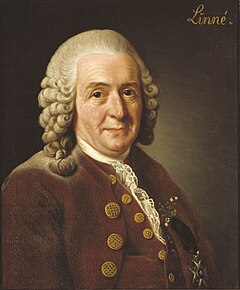
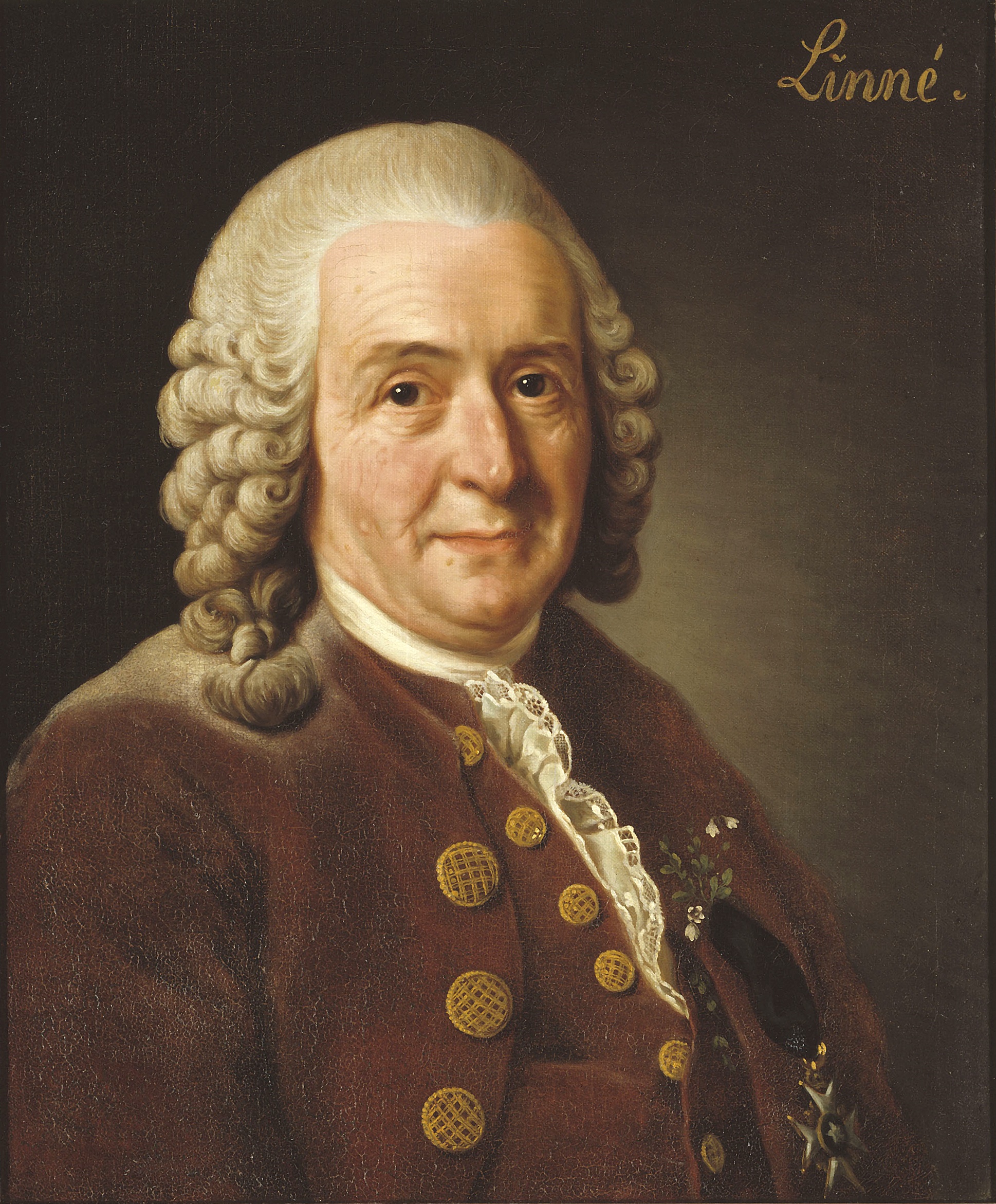
Carl Linnaeus (1707-1778)

Carl_von_Linné.jpg

He was a Swedish botanist, physician, and explorer, who create a uniform system for naming natural genera and species of organisms, known as binomial nomenclature. He is known as the father of modern taxonomy, and is also considered one of the fathers of modern ecology. 


By: José Alberto de León Ayala

René Descartes (1596-1650)

descartes6.jpg

French mathematician, scientist, and philosopher. He was one of the first to abandon scholastic Aristotelianism, because he formulated the first modern version of mind-body dualism, he promoted the development of a new science grounded in observation and experiment, he has been called the father of modern philosophy. Applying an original system of methodical doubt, he dismissed apparent knowledge derived from authority, the senses, and reason and erected new epistemic foundations on the basis of the intuition that, when he is thinking, he exists.


By: Nadia Velázquez

Jean Baptiste Lamarck (1744-1829)

The first was that the environment gives rise to changes in animals. He cited examples of blindness in moles, the presence of teeth in mammals and the absence of teeth in birds as evidence of this principle. The second principle was that life was structured in an orderly manner and that many different parts of all bodies make it possible for the organic movements of animals.

Although he was not the first thinker to advocate organic evolution, he was the first to develop a truly coherent evolutionary theory. He outlined his theories regarding evolution first in his Floreallecture of 1800, and then in three later published works:
  • Recherches sur l'organisation des corps vivants, 1802.
  • Philosophie Zoologique, 1809.
  • Histoire naturelle des animaux sans vertèbres, (in seven volumes, 1815–1822).

By.Jose Manuel Vázquez

Francis Bacon (1561- 1626)

Pourbus_Francis_Bacon.jpg

His more valuable work was philosophical. He  established and popularized inductive methodologies for scientific inquiry, he demand for an empirical, inductive approach known as the scientific method, which is the foundation of modern scientific inquiry.


By: Ixelle Salas

viernes, 17 de enero de 2014

Aristotle (383 A.C- 322 A.C)

images

He was the first person to give a definition for nature:  is an inner principle of change and being at rest. This means that when an entity moves or is at rest according to its nature reference to its nature may serve as an explanation of the event. The nature of the entity is in and of itself sufficient to induce and to explain the process once the relevant circumstances do not preempt it.


By: Nadia Velázquez 
                                                                                                                                         Source